
Blog
What was built at the Rewiring Biology hackathon
A closer look at the three prize-winning solutions from our San Francisco AI x Biology hackathon.
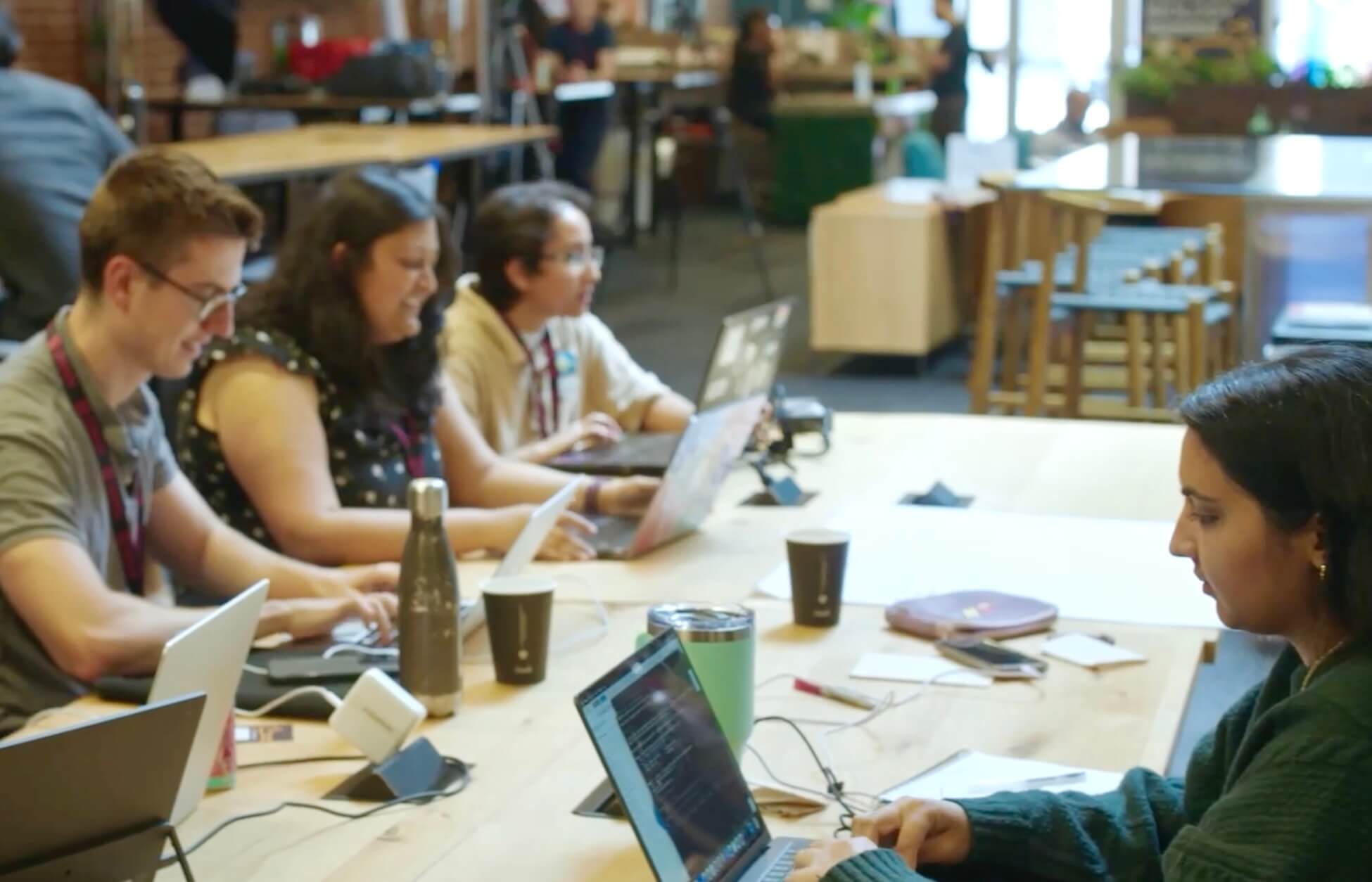
On 11 and 12 July 2026, teams of AI engineers, computational biologists, and ML researchers came together in San Francisco for Rewiring Biology, Owkin's two-day hackathon. Each team had access to K Pro, Owkin's AI Scientist environment, alongside public datasets including MOSAIC Window and TCGA, cloud infrastructure and language model capabilities through AWS, and web search from You.com.
The challenge was open-ended: build something that extends what K Pro can do for biomedical research. What came back across the teams covered a wide range of problems, from spatial reasoning over tumor tissue and mechanistic interpretability of biomedical AI, to institutional memory layers and drug development programme monitoring. Three solutions stood out to the judges. Here is a closer look at each.
The prize winners
KScope: Illuminating the black box
Across biomedical AI, foundation models are increasingly trusted to reason over histology images, genomic profiles, and clinical data, yet the mechanisms behind their outputs can remain opaque. A model might correctly identify a tumor subtype without anyone knowing which features it used to get there. In high-stakes Across biomedical AI, foundation models are increasingly trusted to reason over histology images, genomic profiles, and clinical data, yet the mechanisms behind their outputs can remain opaque. A model might correctly identify a tumor subtype without anyone knowing which features it used to get there. In high-stakes research, that opacity is a problem.
KScope applies mechanistic interpretability to foundation models. For their demonstration the team used Phikon-V2 and H-Optimus-0, two histology foundation models, to probe what biological concepts are encoded in the models’ internal representations and test those concepts causally. The team's approach takes image tiles, encodes them via the frozen models, identifies concept directions through linear probing, and then uses activation patching to verify that those concepts are causally involved in the models’ predictions rather than merely correlated with them.
Crucially, no retraining is required. KScope works on the models as they exist, which means the technique generalizes to other foundation models and could be applied across K Pro's ecosystem without additional training overhead.
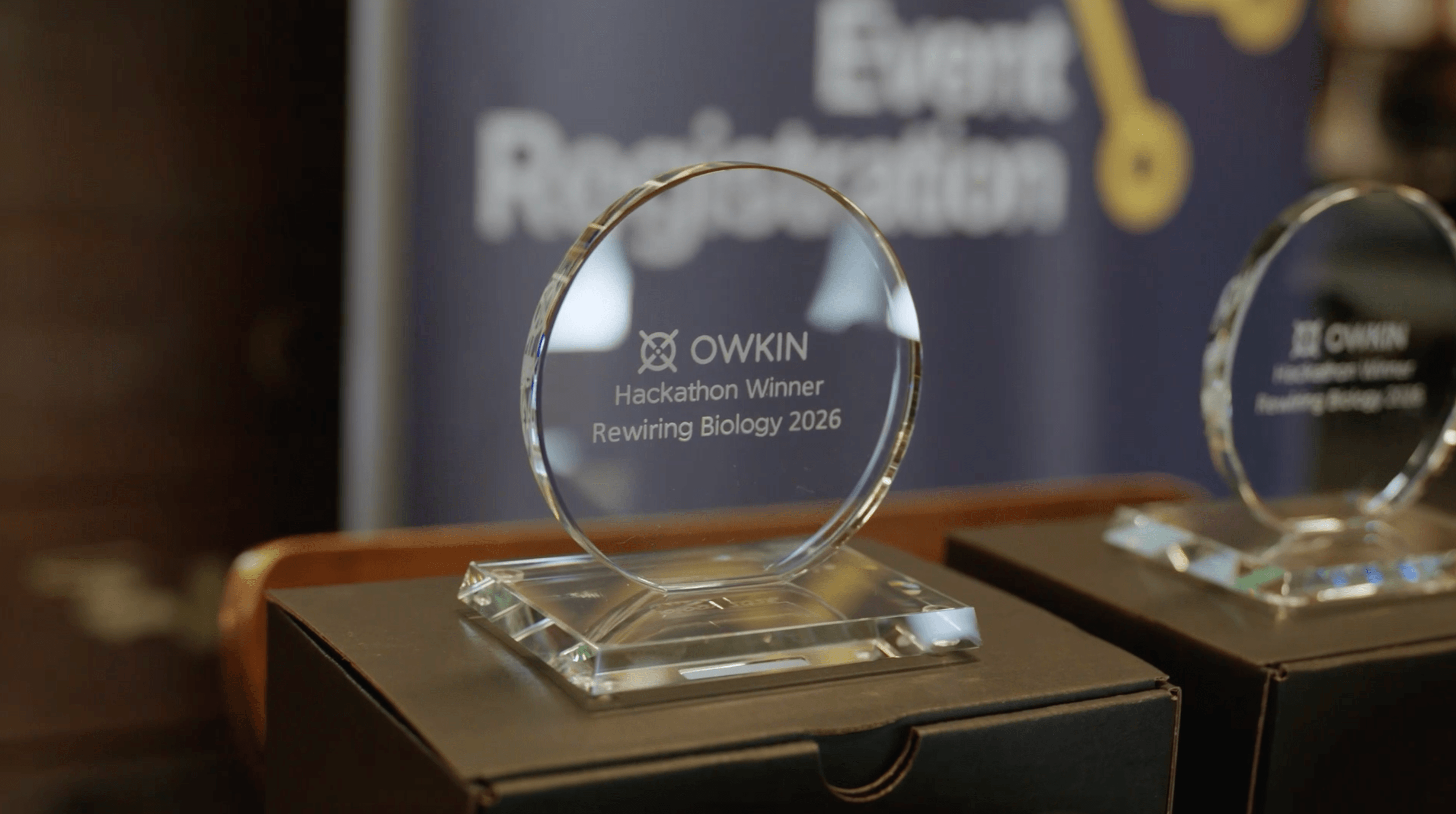
The judges awarded KScope the first prize for the depth of its ML execution and the clarity of its path forward. Mechanistic interpretability for biomedical AI is still an emerging field. What the team demonstrated in 48 hours points at a genuinely important future capability: the ability to audit the AI systems doing biomedical reasoning.
Discordance: When evidence conflicts, say so
Discordance started from a specific failure mode that anyone who has used an AI system for literature review will recognize. When you ask a question and the evidence points in different directions, most systems average the disagreement away. You get an answer. You don't get the disagreement.
Team Discordance built a system that refuses to do that. Discordance maintains a persistent, structured knowledge base around olfactory receptors in cancer, populated from papers, patient data, protein structures, and patents. When evidence conflicts, it flags the disagreement explicitly, scores each source by quality and relevance, and presents the conflict as a finding rather than noise to be smoothed over. When uncertainty is too high for the system to reason responsibly, it escalates to a researcher.
The MCP integration is clean and functional. Discordance works as a standalone tool plugged into K Pro's reasoning loop, acting as an evidence broker the agent can query at inference time. When judges pushed on edge cases, the system handled ambiguity gracefully rather than confabulating.
The judges recognized Discordance for the clarity of its standalone use case, and gave the team the second prize for its fit with K Pro's architecture, and its novelty. What stood out was the execution: a working, queryable, uncertainty-aware evidence layer designed to plug directly into K Pro's reasoning loop, built in 48 hours.
Spatial Awareness: From tissue to target in one workflow
The problem Spatial Awareness set out to solve is familiar in translational oncology. Spatial transcriptomic data is rich and biologically meaningful, but turning it into a research question that can be experimentally tested requires stitching together several analytical frameworks in sequence, each demanding specialist knowledge.
The team built a K Pro module that handles the full chain. It takes spatial tissue data, identifies cellular neighborhoods and immune niches within the tumour microenvironment, maps cells onto curated single-cell atlases, uses LLM-guided reasoning to propose candidate therapeutic targets, and then runs those candidates through virtual cell perturbation models to predict treatment effects computationally before anything goes near a wet lab.
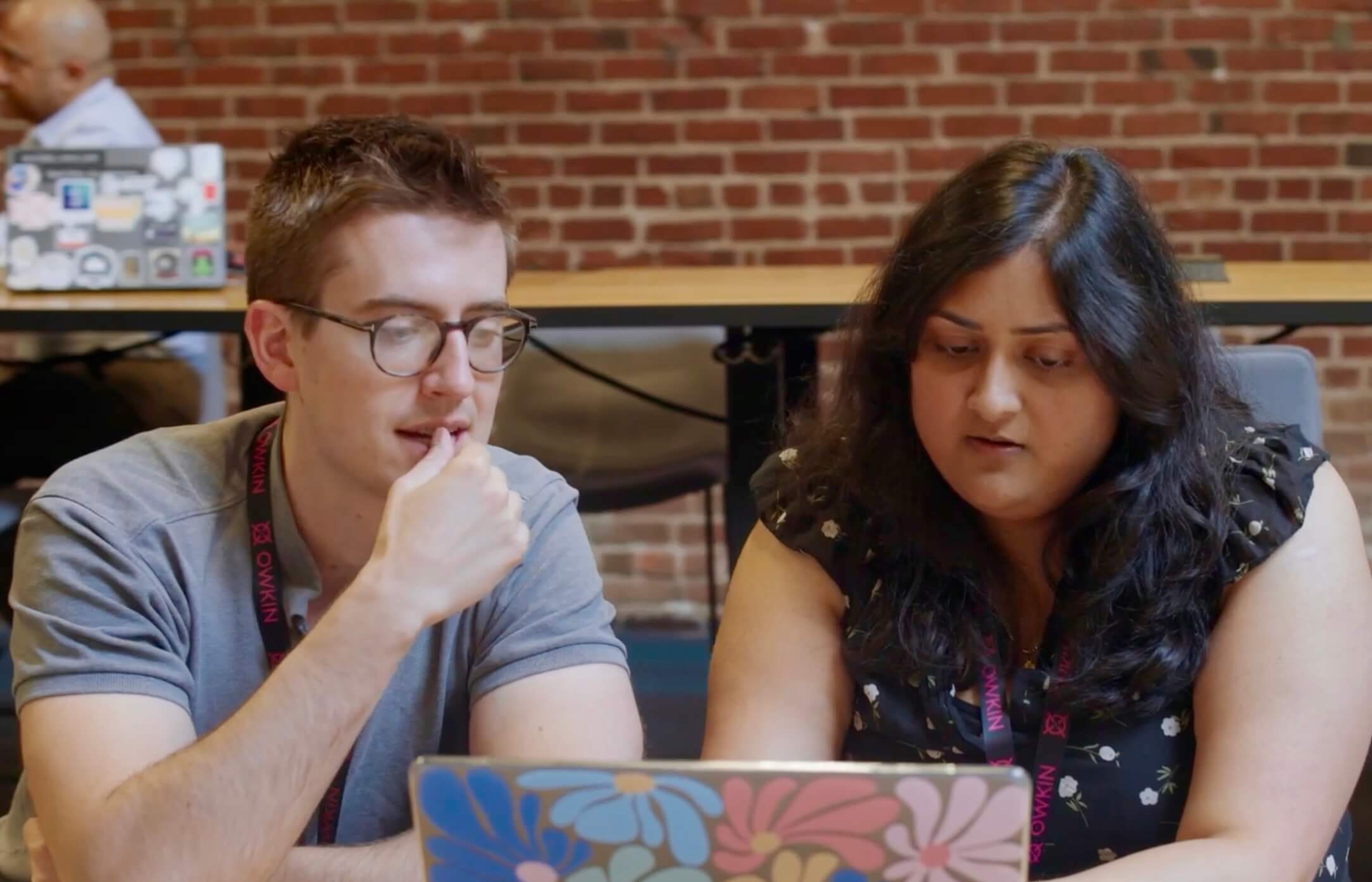
The proof of concept was concrete: the workflow identified LCP2 inhibition as a candidate strategy for reactivating tumor-infiltrating CD4+ T cells. That is not a trivial result to arrive at in 48 hours starting from raw spatial data.
The judges gave Spatial Awareness the third prize for how biologically grounded it is, how naturally it maps onto a real research workflow, and how clearly it fills a gap between data generation and experimental prioritization in spatial oncology. The team was also notably resilient under technical questioning, with answers about their biological reasoning that went well beyond the demo.
What this tells us
What stayed with us from the weekend was less any single solution than a pattern that emerged on its own. Several teams, working independently, arrived at the same instinct: AI that's honest about the limits of its own evidence. In a field where overconfident AI is the norm, that convergence is a signal worth paying attention to.
Authors


