


Rewiring Biology
A two-day hackathon where frontier engineers, AI scientists, and computational biologists build the tools that help science move faster.

Event Partners


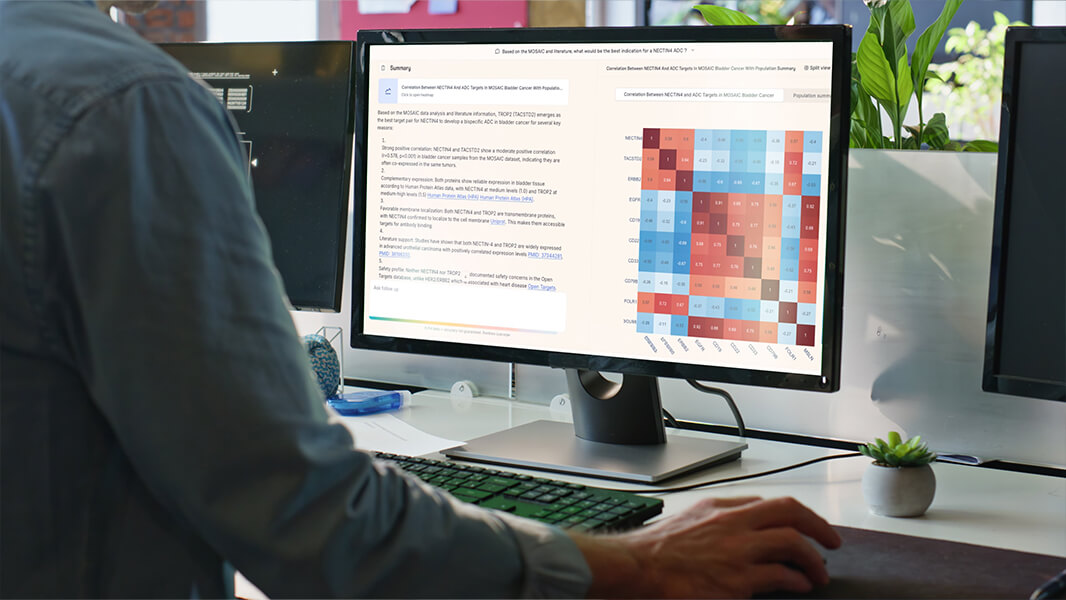
How can frontier AI systems reason and act over complex biological data to support real scientific discovery?
Background
Biology is generating data faster than science can interpret it. Spatial omics, genomics, imaging, and literature are accumulating at a pace no human — or conventional tool — can keep up with.
Owkin has spent years building infrastructure and datasets at the intersection of AI and biomedical research. Combined with K Pro, Owkin’s AI Scientist, this creates a rare opportunity to explore how AI can genuinely accelerate the pace of biomedical discovery.
Challenge
In this hackathon, participants will build MCP tools and agentic components that extend what an AI Scientist can already do: reasoning over biological data, forming hypotheses, mapping context, and surfacing insights and semi-autonomously explore research spaces that would otherwise take weeks of manual work.
What you will build

MCP tools and agents that can be integrated in the future into K Pro

Workflows that combine MOSAIC Window spatial omics data with public literature and biomedical knowledge bases

Tool-using or multi-agent systems designed for research-style reasoning and analysis

New capabilities that improve biologically grounded hypothesis generation and scientific question answering
Hackathon day 1
July 11, 2026
Introductory and plenary sessions followed by the official hackathon kick-off.
Hackathon day 2
July 12, 2026
Project pitches, winner announcements and closing ceremony with guest speaker and entertainment.
Participants will receive access to:
- K Pro
Owkin’s AI Scientist for biomedical reasoning, experimentation and exploration of public literature and databases - MOSAIC Window
A curated public data tier derived from Owkin’s proprietary dataset MOSAIC, the world’s largest spatial omics dataset in oncology - TCGA
The Cancer Genome Atlas, a comprehensive public genomic and clinical dataset - You.com credits
for AI-powered search and retrieval augmentation - Claude API credits
for model development, reasoning, and experimentation





Projects will compete across two prize tracks
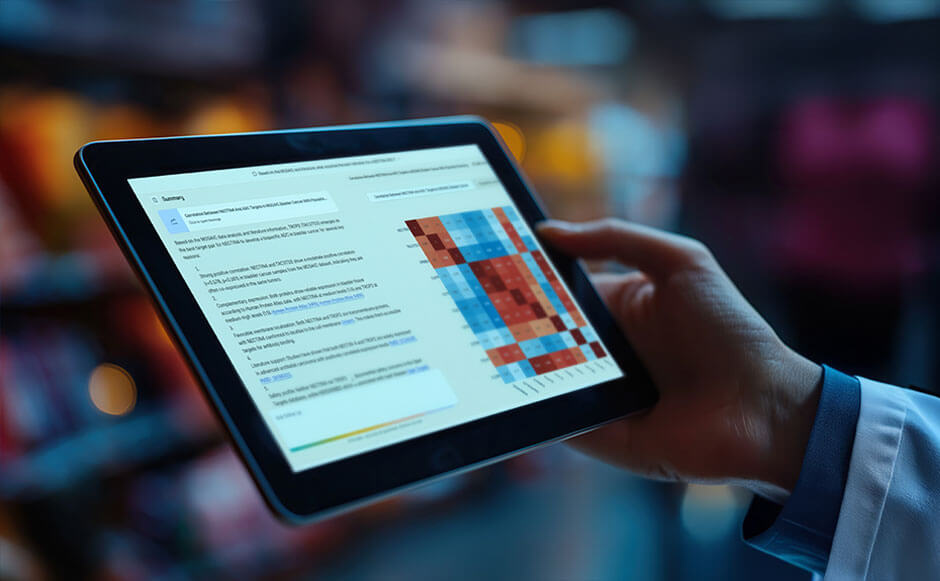
Awarded to the most compelling and reusable AI capability built with K Pro or the provided datasets.
- Integrability
- Performance
- Depth of biomedical reasoning
- Extension of K Pro capabilities
- Usefulness and reusability
- Technical quality and user experience
Awarded to the most ambitious but functional project, recognising teams that swung for something genuinely new, even if not fully finished.
- Ambition and originality
- Performance vs. function
- Novel interaction paradigms
- Long-term potential
- “This feels like the future” factor

Awarded to the solution that best grounds biological reasoning in the right evidence at the right moment, surfacing connections that would otherwise take days to find.
- Relevance and precision of knowledge grounding
- Integration of retrieved context into reasoning and inference
- Ability to surface non-obvious connections across literature and data
- Scientific value of what becomes discoverable as a result
Who should apply?
You might come from the building side — agentic components, AI workflows, LLM-based reasoning systems, scientific tooling and research infrastructure.
Or from the biology side — computational biology and bioinformatics, from single-cell and spatial omics to biomedical imaging and multimodal data.
The best teams bring both.
- ML researchers and AI scientists
- Agent builders and frontier engineers
- Computational biologists and bioinformaticians
- Research engineers with a product sensibility